
Blood Pressure

Understand your blood pressure, one step at a time.

Simple explanations, practical guidance and useful tools to help you understand your readings and measure more confidently.

Learn

Blood pressure, made easier to understand.

01

Understanding blood pressure.

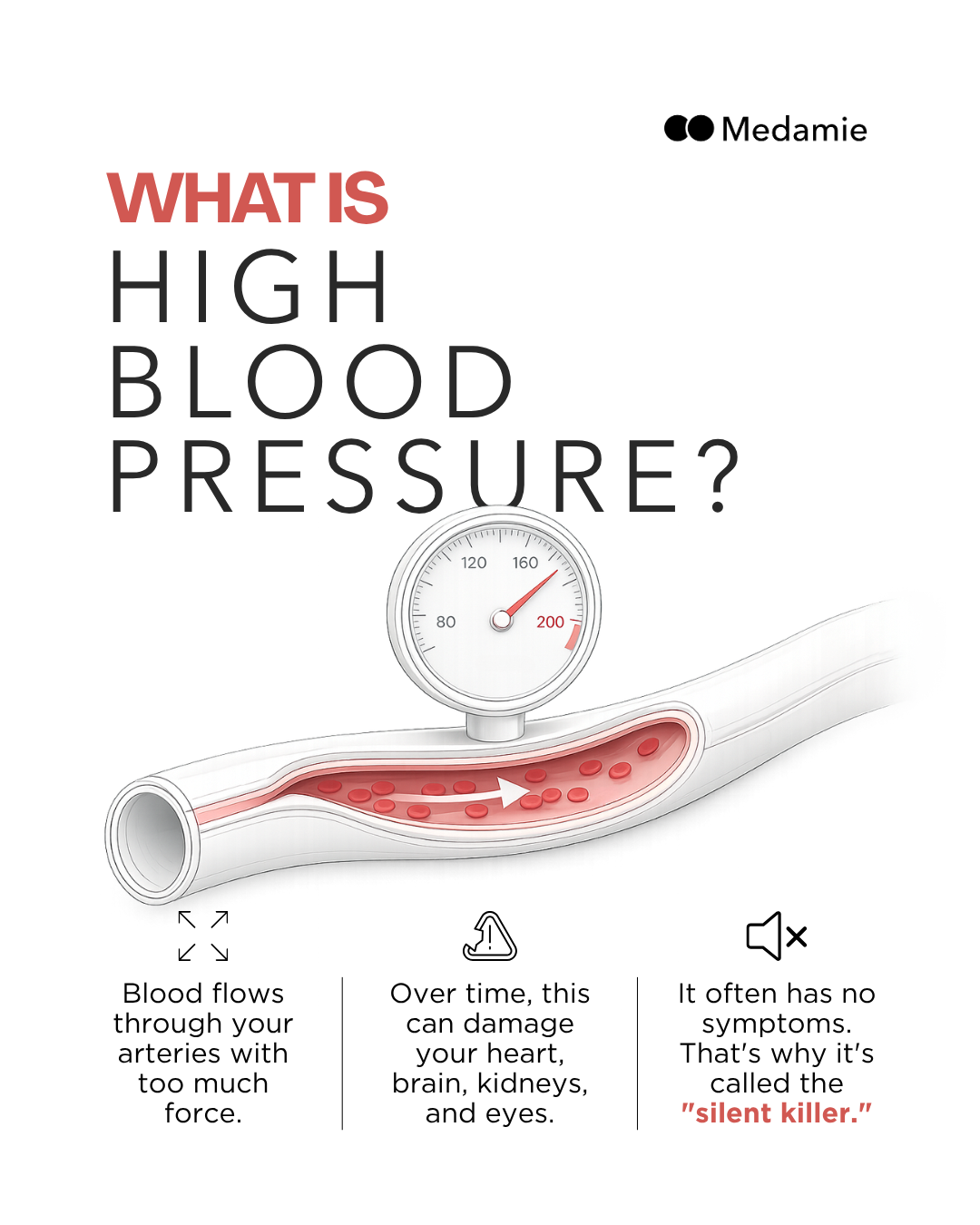
Blood pressure is the force of blood pushing against the walls of your arteries.

When this pressure stays higher than it should over time, it is called high blood pressure, or hypertension.

It often causes no obvious symptoms, but it can gradually damage the heart, brain, kidneys, eyes and blood vessels.
What is high blood pressure guide
02

Why it matters.

High blood pressure can quietly affect the heart, brain, kidneys, eyes and blood vessels.

High blood pressure does not usually make you feel unwell.

Over time, it can increase the risk of heart disease, stroke, heart failure, kidney disease and vision loss.

Monitoring your blood pressure regularly and following your healthcare plan can help reduce these risks.

03

Know your numbers.

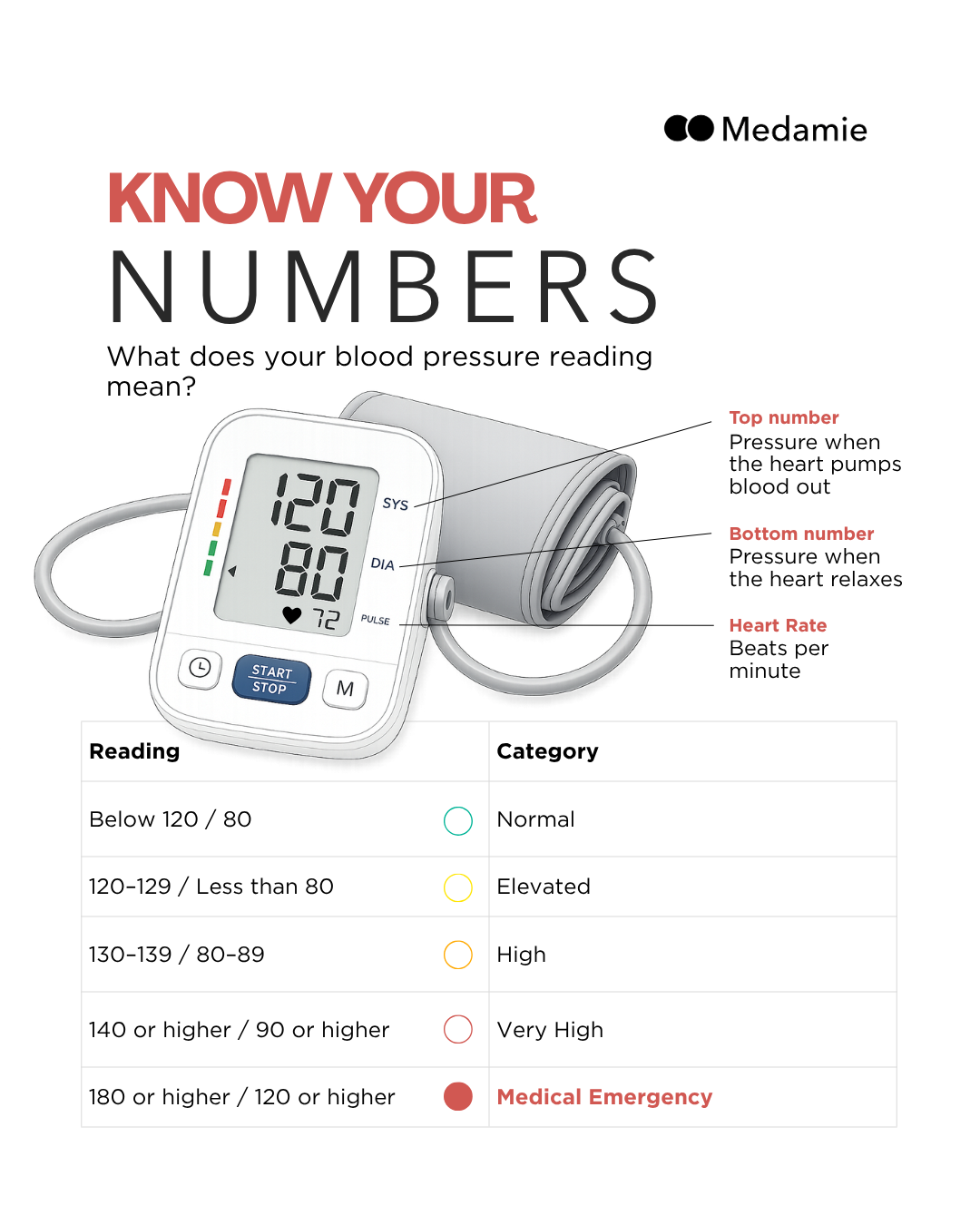
Systolic is the top number. It shows the pressure when your heart pumps blood out.

Diastolic is the bottom number. It shows the pressure when your heart relaxes.

Pulse shows how many times your heart beats each minute.

Know your blood pressure numbers guide
04

Blood pressure categories.

The category is based on both numbers and should be interpreted using repeated readings rather than one isolated result.

Below 120 / 80Normal
120–129 / Less than 80Elevated
130–139 / 80–89High
140 or higher / 90 or higherVery high
180 or higher / 120 or higherMedical emergency

These ranges are a general guide. Always follow advice from your healthcare professional, especially if your readings are very high or you feel unwell.

05

Measuring correctly.

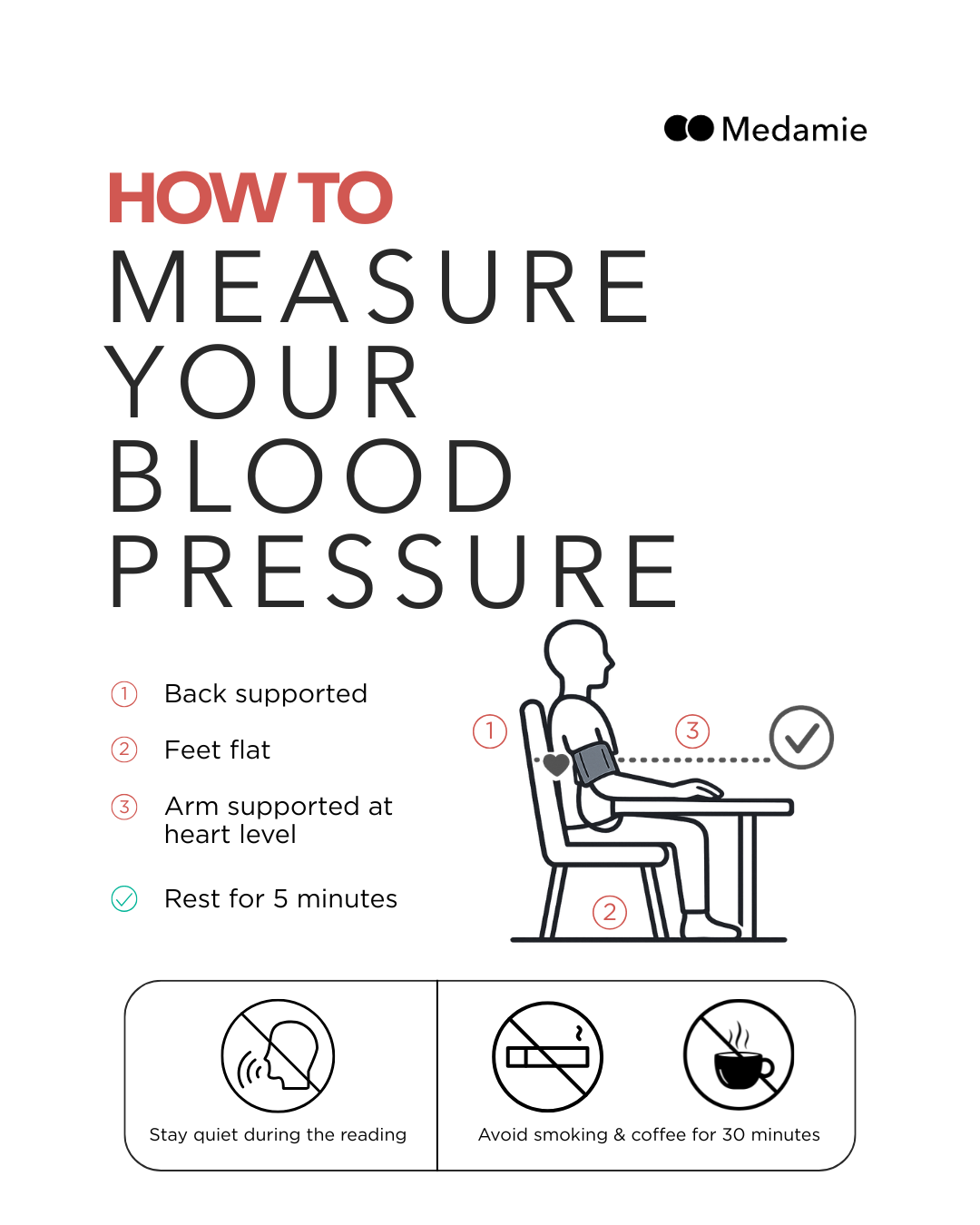
Sit with your back supported and both feet flat on the floor. Keep your arm supported at heart level and rest quietly for five minutes before taking a reading.

Avoid smoking and coffee for at least 30 minutes beforehand, and do not talk while the measurement is being taken.

How to measure your blood pressure guide
06

Tracking your readings.

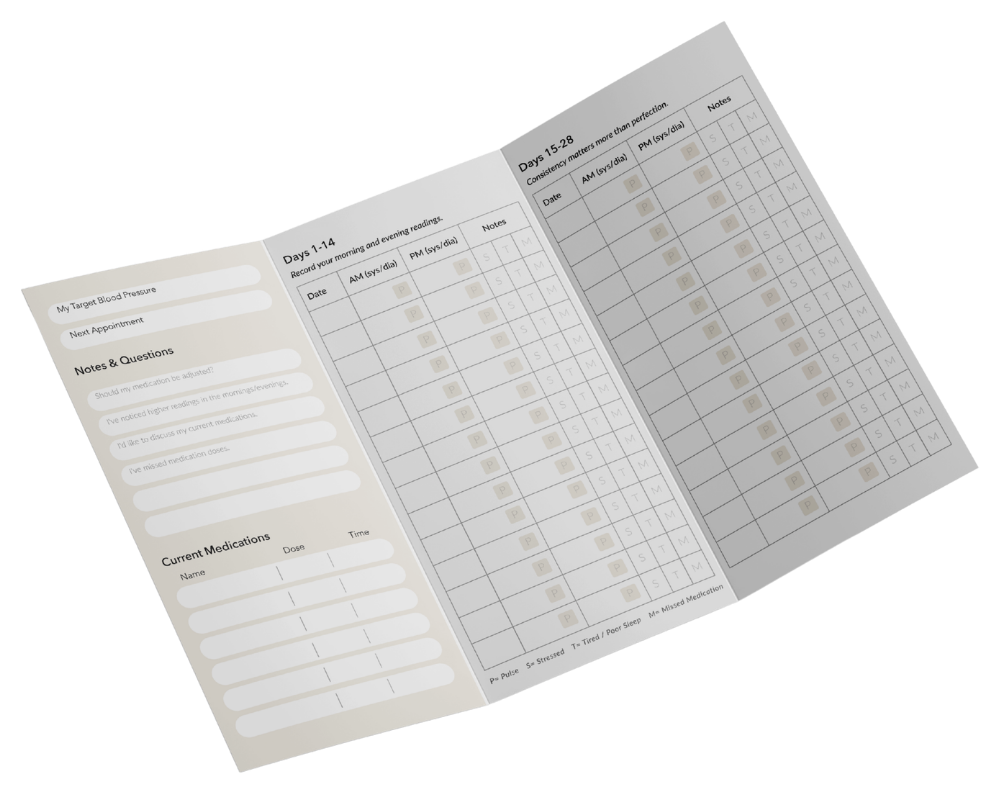
Recording your readings over time can help you and your healthcare team notice patterns and make better-informed decisions.

Try to measure at similar times each day and bring your record to appointments.

Download the free Blood Pressure Tracker

Companion

Meet the Companion coming soon.

A thoughtfully designed health companion to help you keep blood pressure information, notes and daily routines easier to organize between appointments.

Explore Companion
Cardia Companion Fold coming soon

Have questions about managing your readings?